
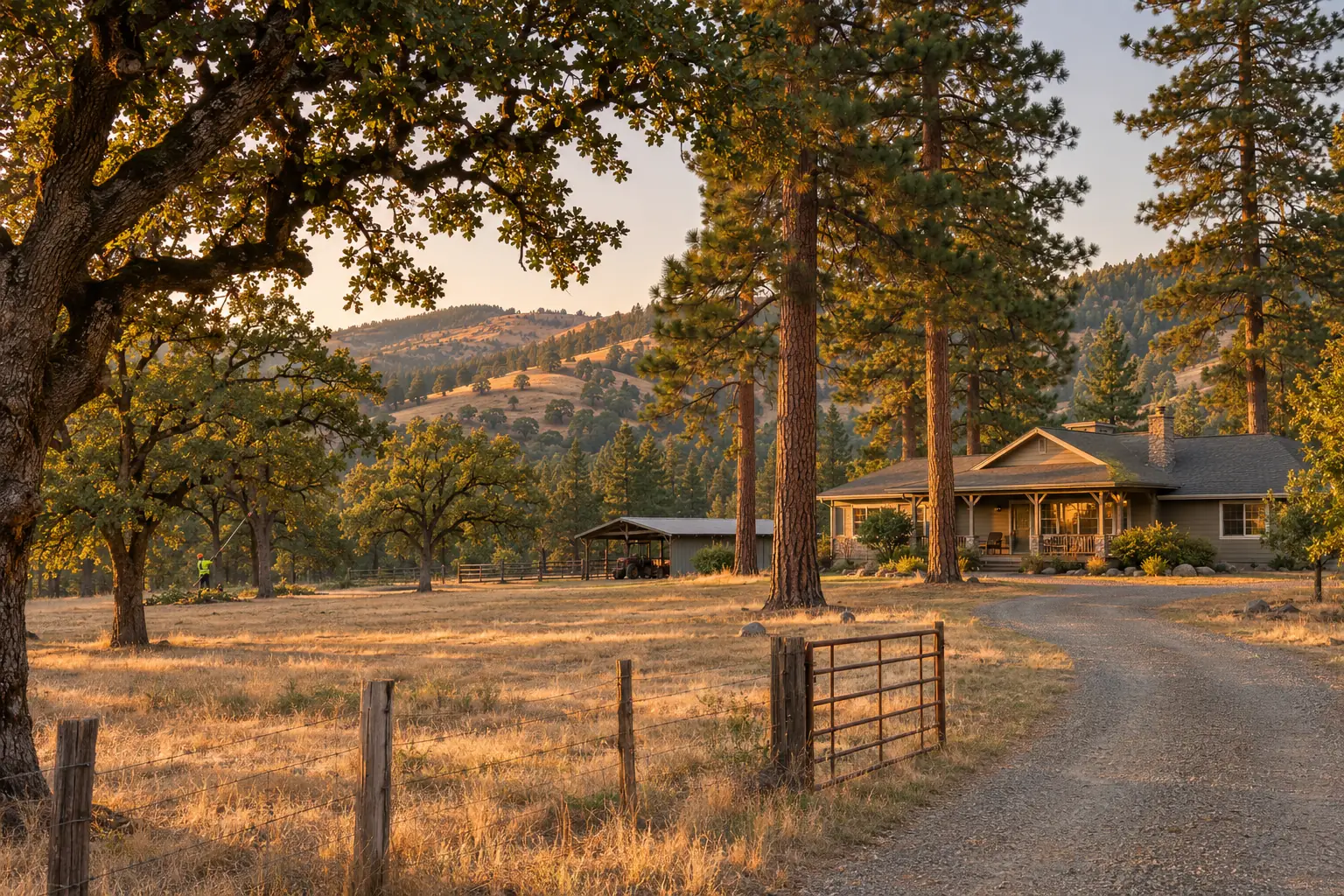
For a tree service in Rogue River, one free call to (541) 855-3193 puts you through to one independent company that holds an Oregon CCB license and works around Rogue River and the Evans Valley. Ask that company about a visit and a written price. Estimates on ordinary jobs are usually free, but that is the company's call, so confirm it on the phone. Hiring is your decision, and this referral service does no tree work itself.
Below you will find the jobs people around here hire a tree service for, a rough idea of cost, the city, county and state forestry rules that can change a job, and a short checklist for vetting any company before a saw starts.
What a tree service does around Rogue River
A tree service prunes, removes, grinds and clears trees and brush, and around Rogue River a good share of the work is shaped by fire season, creeks and steep ground. The town sits where Evans Creek runs into the Rogue River, with Wards Creek passing through as well, and the Evans Valley climbs north from there toward Wimer. Homes range from small city lots with a street tree out front to acreage with a barn, a well house and a hillside of pine and oak.
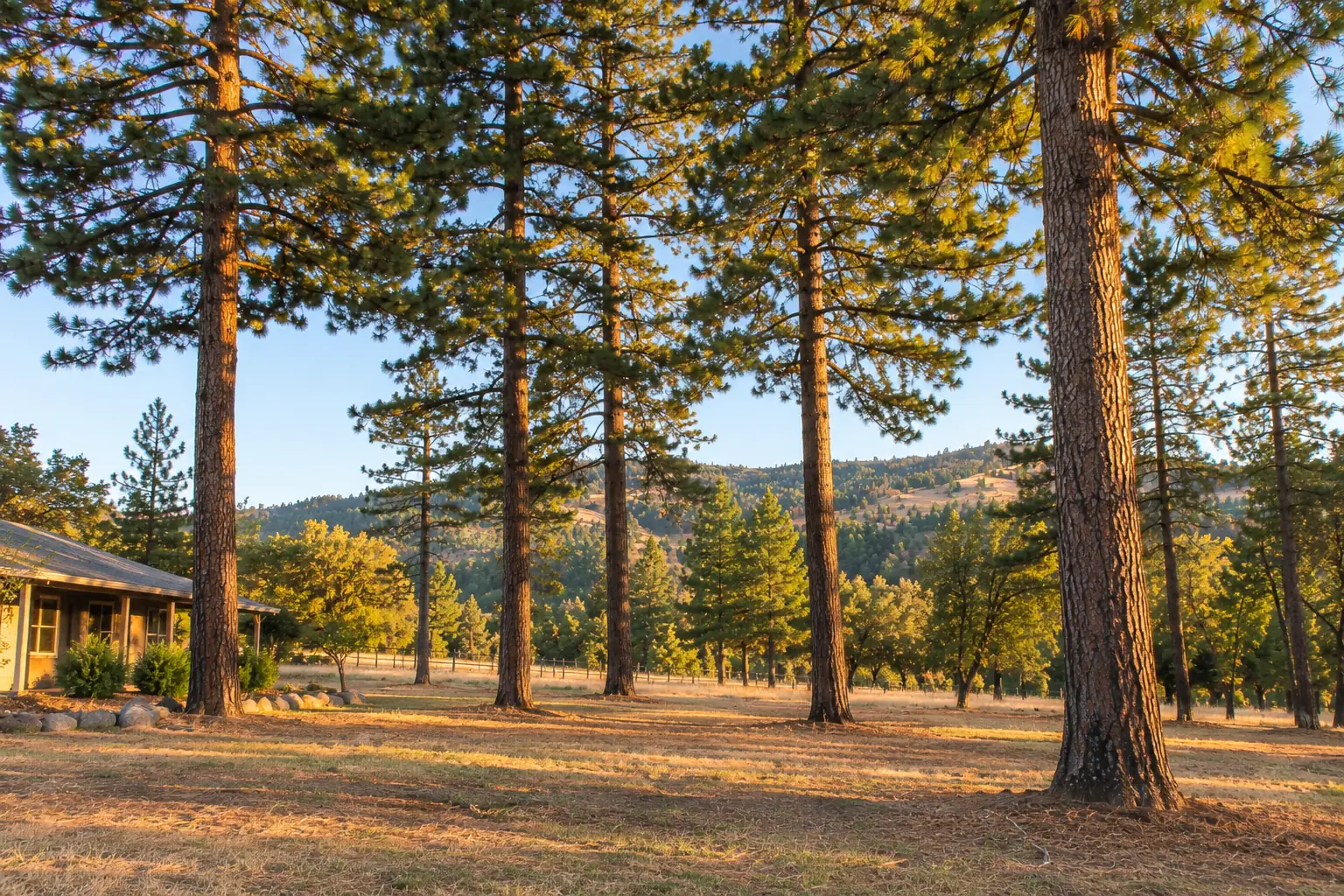
The trees that bring most calls are the big conifers and the native hardwoods. Ponderosa pine and Douglas-fir grow tall over houses and shops. Oregon white oak and California black oak spread wide over pastures and drives. Madrone, big-leaf maple, cottonwood and alder fill in along slopes and creek banks. Each has its own problems, and a tree service that works the area sees all of them.
Most requests fall into a handful of groups:
- Pruning and trimming to lift limbs off a roof, clear a driveway, take out dead wood or thin a crowded crown
- Removal of a dead, dying or unwanted tree, from a small ornamental to a tall fir next to the house
- Stump grinding after a removal, so the spot can be mowed, planted or built on
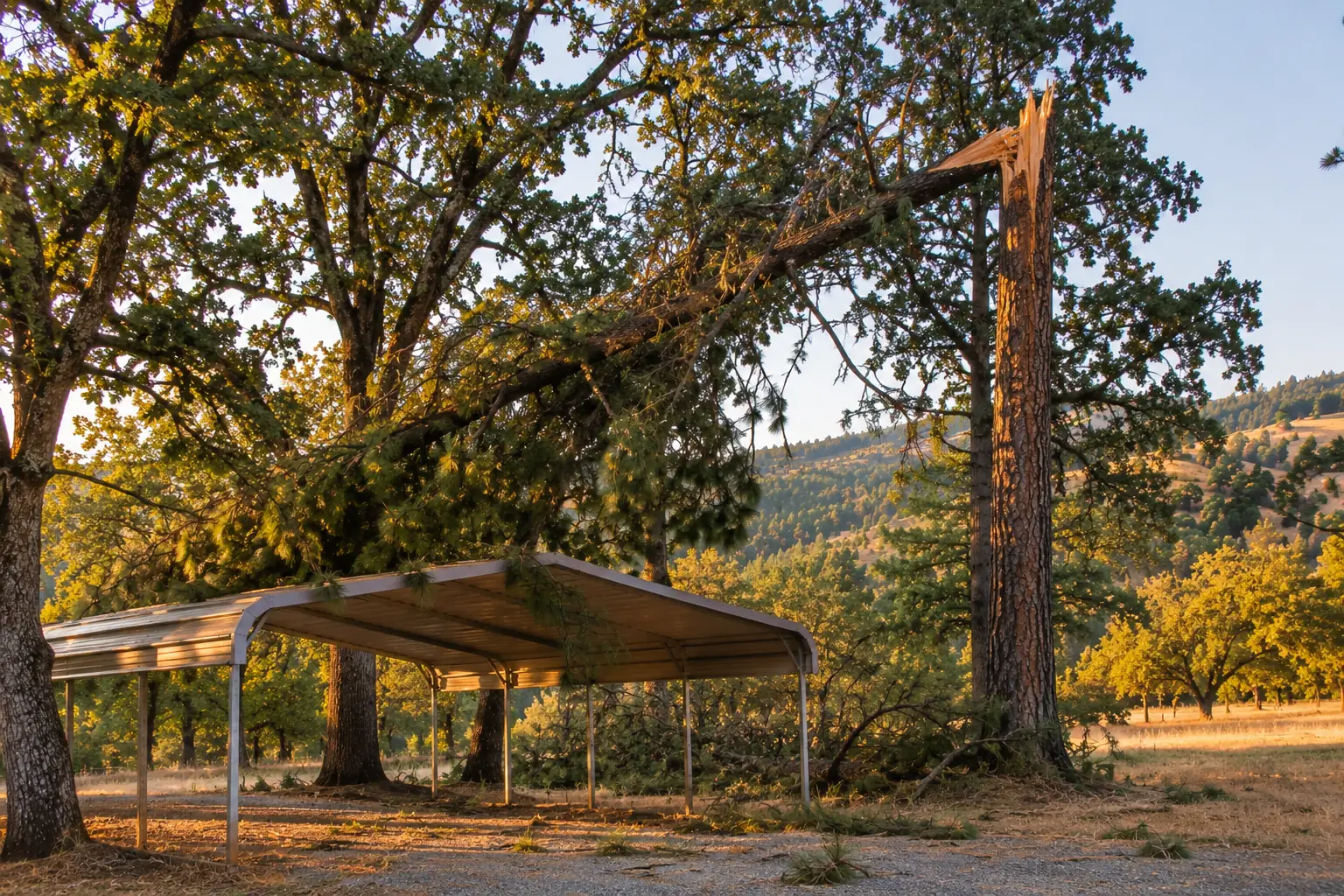
- Storm and emergency work when a tree or limb has come down on something or is about to
- Hazard and dead tree work, which starts with a look at whether a tree is likely to fail
- Fire-safe limbing to raise branches off the ground and break up fuel near a home
- Land clearing for a homesite, a fence line, a pasture or a forest thinning job
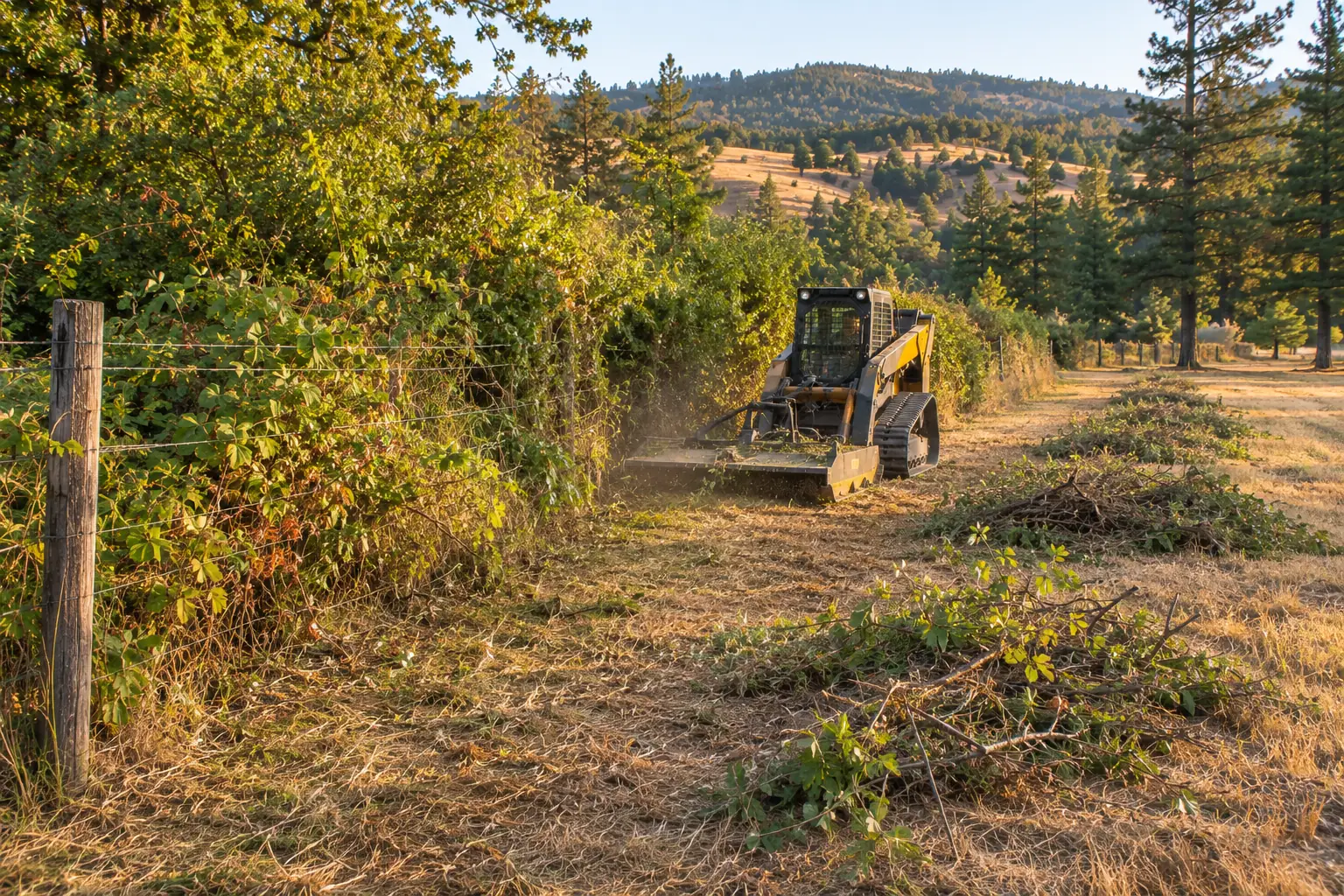
- Brush clearing of blackberry, scrub oak and other growth that crowds buildings and roads
You do not need to know which group your job fits before calling. Describe what the tree is doing and what it is near, and the company sorts out the rest at the visit.
Every service you can ask about
Any of the jobs below can be put to the independent tree service you reach, in and around Rogue River. Ask on the call whether it takes yours. Each link opens a page with more detail on that kind of work, what affects its price and what to ask the company.
| Job | Typical reason to call | Read more |
|---|---|---|
| Trimming and pruning | Limbs over the roof, dead wood, low branches over a drive | Tree trimming in Rogue River |
| Tree removal | A tree that is dead, declining, in the way or too close to a building | Tree removal in Rogue River |
| Stump grinding | A stump left behind after a removal or a storm | Stump grinding |
| Emergency work | A tree on a house, car, fence or road, or a limb hanging loose | Emergency tree service |
| Hazard and dead trees | A lean, a crack, rot, or a tree that died this year | Hazard tree service |
| Fire-safe limbing | Branches and brush that would carry fire to a home | Fire-safe pruning |
| Land clearing | Opening ground for building, pasture or thinning | Land clearing |
| Brush clearing | Blackberry, scrub and young trees along fences and drives | Brush clearing |
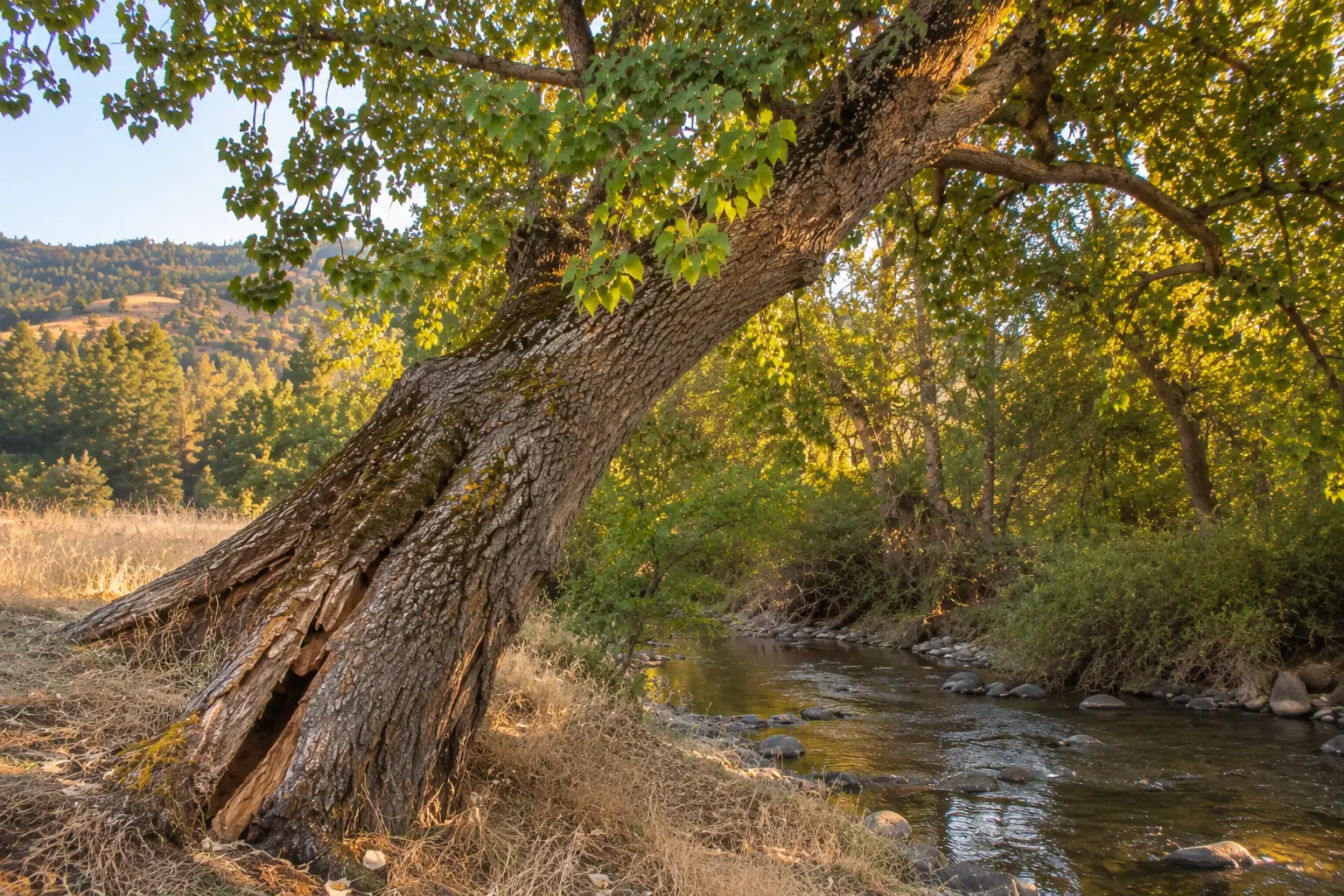
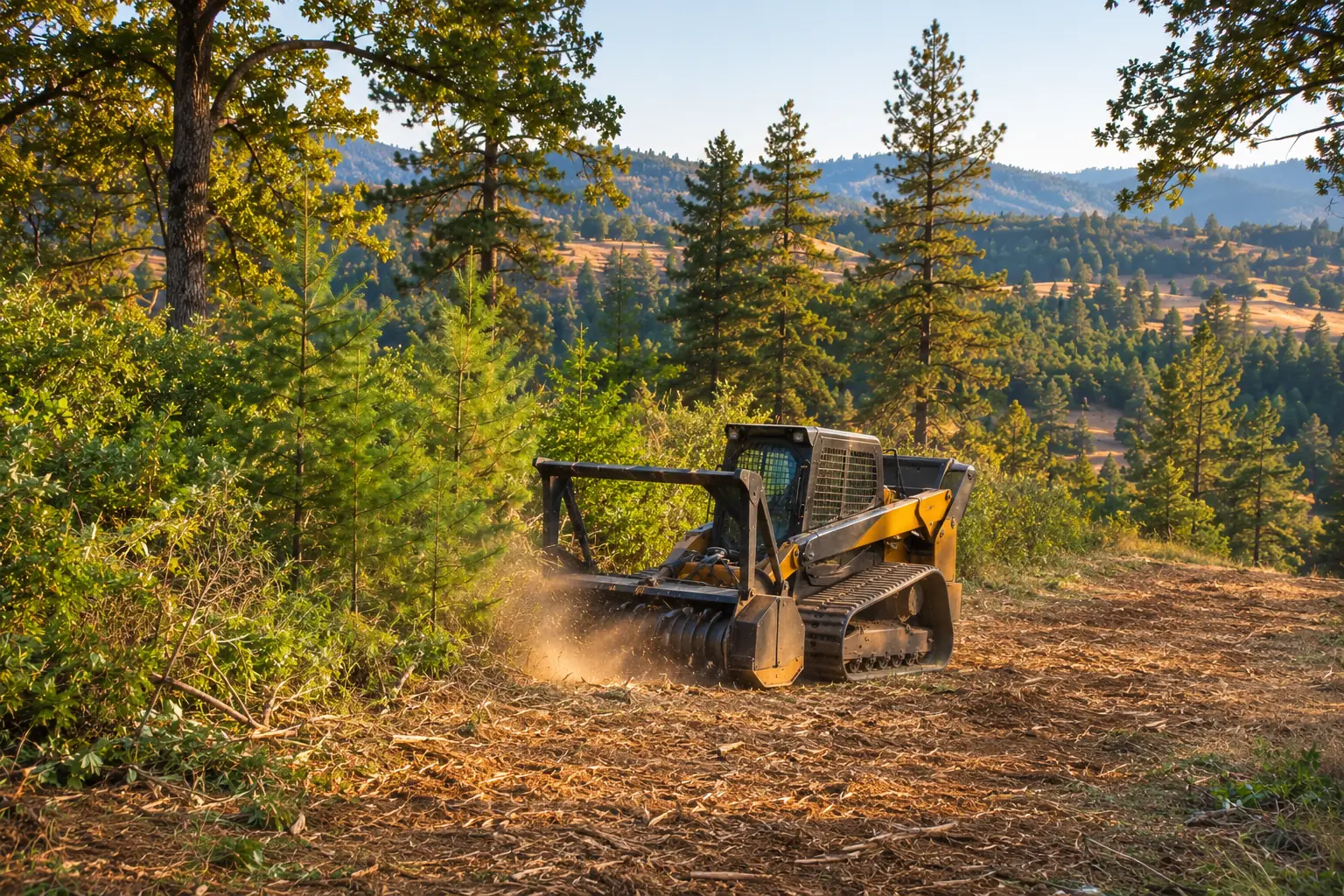
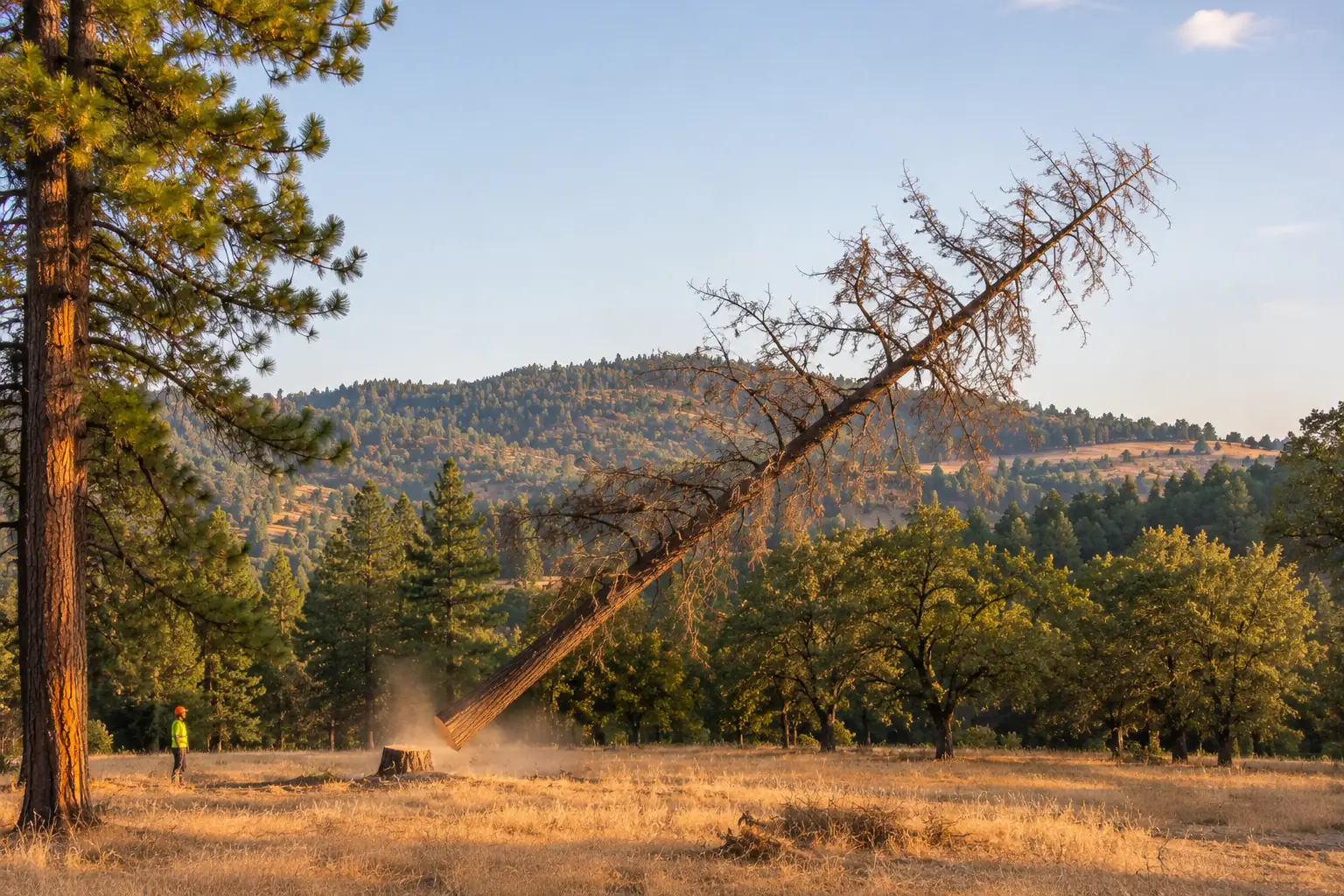
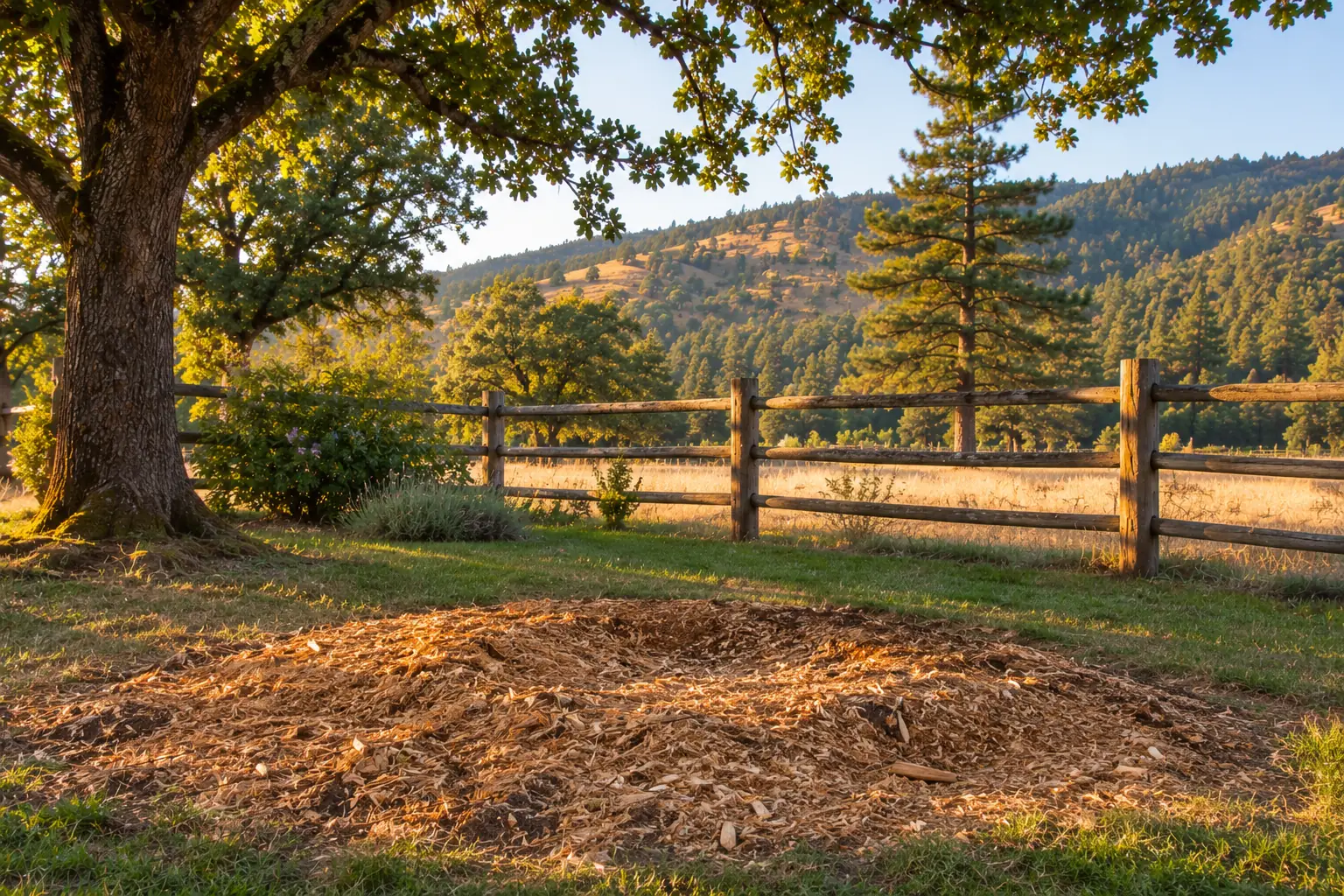
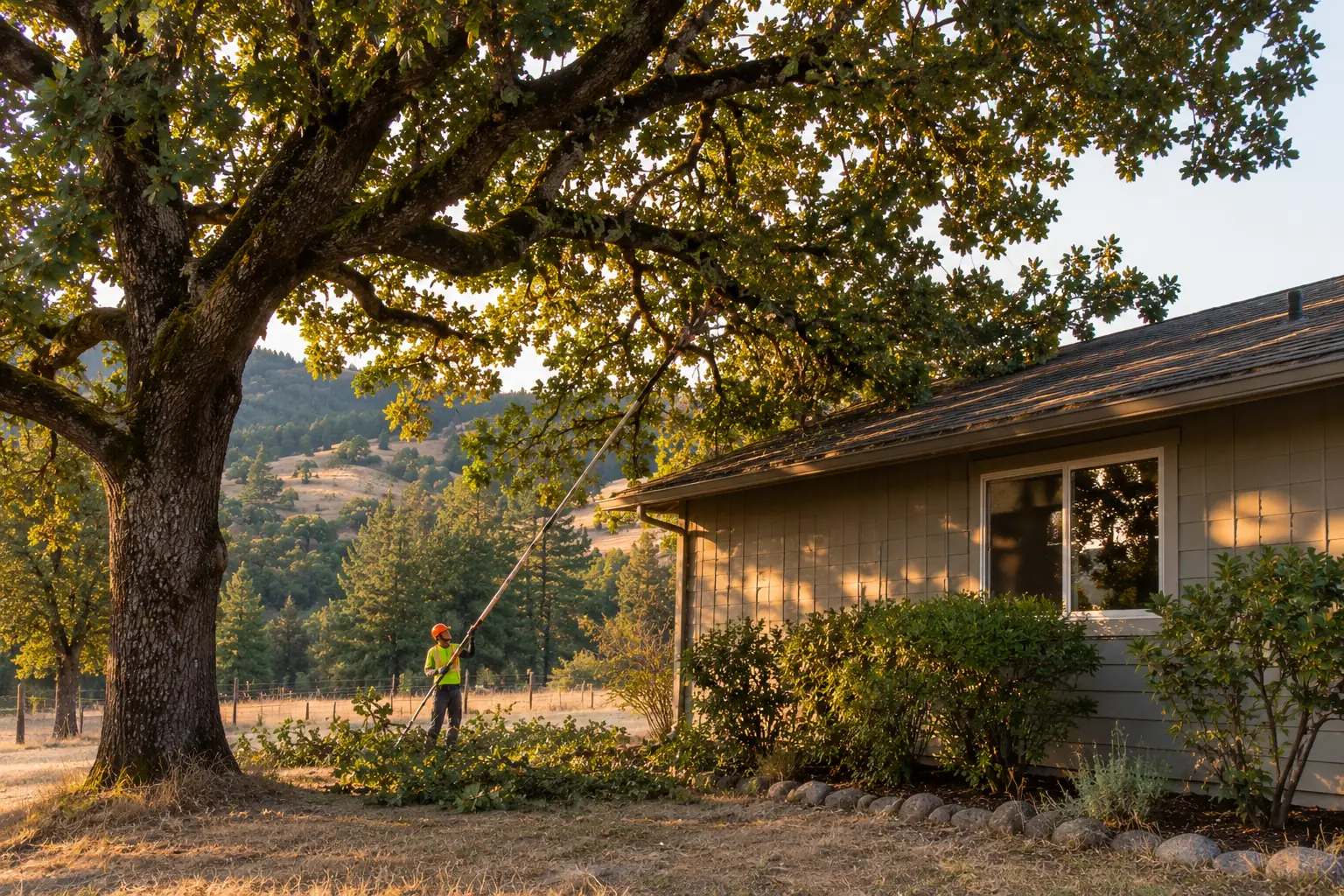
Trimming is often the better first question. A tree that worries you may only need dead wood out or one heavy limb shortened, and keeping a healthy oak or pine is usually cheaper than taking it down and grinding the stump. The International Society of Arboriculture's homeowner page on pruning your trees says no branch should be cut without a reason, and it calls topping "perhaps the most harmful tree pruning practice known." If a company offers to top a tree, ask what else it would suggest.
Arborists, tree services and what the words mean
Arborists study and care for individual trees: how they grow, what makes them sick and how to cut them safely. The tree service is the company sending the crew, and that company may or may not employ one. The two words get mixed up in ads, so it pays to ask exactly who will look at your tree.
The common credential is the ISA Certified Arborist, issued by the International Society of Arboriculture. ISA says certification shows a person has the minimum knowledge and skill for the scope of the credential, and that holders are bound by a code of ethics. You can look up any name in ISA's Find an Arborist directory, which exists so homeowners can check a credential.
For a tree you think could fall, ask whether the person who inspects it holds ISA's Tree Risk Assessment Qualification, known as TRAQ. It covers judging the chance that a tree or limb fails and what it would hit. Neither credential replaces a license. In Oregon, the license is what allows a business to take paid tree work, and the training credentials tell you about the person doing the looking.
This site holds none of these credentials and makes no claim about any company's training. Ask the company you are connected with which credentials its people hold, then check them yourself.
Towns and back roads this referral covers
This referral takes requests from Rogue River and the towns around it, on both sides of the river and up the side valleys. Each town page below covers what is different there: the trees, the roads in, and which rules apply.
- Rogue River, inside and outside city limits, along Evans Creek and Wards Creek and the river itself. City rules apply inside the limits and county rules outside, so say which side you are on when you call.
- Wimer, up the Evans Valley north of town, where homes sit among pine and oak on rural acreage.
- Sams Valley, the open farm and ranch country north of the Rogue, with big oaks over pastures and fence lines.
- Shady Cove, upriver on the Rogue, where riverside lots and tall conifers make for careful removals.
- Trail, farther up the river valley, with rural parcels and forest edges.
- Eagle Point, the growing town on Little Butte Creek, with neighborhood lots as well as acreage.
If your place is between towns or down a road not named here, call anyway. The service areas page explains how to describe a rural address so the company can find it, and the company will say on the call whether the job is within reach.
What tree work costs: a quick overview
Most single tree jobs around Rogue River run from about a hundred dollars for a small pruning job to a couple of thousand for a large removal, and the only real number is the written estimate from the company that sees your tree. National price guides give a useful band to compare against.
The ranges below come from LawnStarter's national cost guides. They are not local quotes, and they do not include every add-on.
| Job | National range | Source and date |
|---|---|---|
| Tree trimming, per tree | $430 to $640 typical; $85 to $415 under 30 feet; $475 to $1,835 over 60 feet | LawnStarter tree trimming prices, updated September 24, 2026 |
| Tree removal, per tree | $385 to $1,070 typical, national average $630 | LawnStarter tree removal prices, updated October 5, 2026 |
| Stump grinding, per job | $131 to $438, average $272 | LawnStarter stump grinding prices, updated October 5, 2026 |
Several things push a Rogue River job above or below those bands:
- Height and spread. A 90-foot fir takes more time, rigging and cleanup than a 25-foot ornamental.
- What sits underneath. A tree over a roof, a well house or a power line has to come down in pieces.
- Access. A bucket truck needs a solid path. Slopes, soft pasture and narrow drives can mean climbing instead.
- Fire season hours. In summer, ODF limits when power saws may run, so a job may be split across early mornings.
- Cleanup. Chipping and hauling everything costs more than leaving firewood rounds and chips on site.
- Condition. Dead and rotten wood can be brittle, which slows the work and can change how it is done.
For more detail, including land clearing, emergency calls and ways to keep the cost down, read the Rogue River tree service cost guide. Getting more than one estimate is always fine, and a call to (541) 855-3193 never commits you to hire anyone.
How to check a tree company before anyone climbs
Checking a tree company takes about ten minutes, and it is worth doing every time, including for the company this site connects you with. Here is a simple order to follow:
- Get the license number and look it up. Oregon allows tree removal, stump grinding and similar work under a Construction Contractors Board license or a Landscape Contractors Board license, according to the LCB's tree work questions page. The company you reach through this site holds a CCB license. Enter the number in the Oregon CCB license search.
- Read what the search shows. The CCB's consumer tools page says a license check shows whether the license is active, whether there is a bond, whether proof of liability insurance is on file, whether workers' compensation is carried, and any complaints in the past 10 years. You can also call the CCB at 503-378-4621 to ask about complaint history.
- Ask for an insurance certificate. Have it sent from the insurer or agent, and look at the dates.
- Get the price in writing. The estimate should name each tree, what will be done to it, who handles cleanup, whether the stump is included and when payment is due.
- Ask about credentials if they matter for the job. For a hazard question, ask whether an ISA Certified Arborist or a TRAQ holder will do the inspection, and check the name in ISA's directory.
- Watch for warning signs. Pressure to decide today, a large cash payment before work, an offer to top a healthy tree, or a knock on the door right after a storm are all reasons to slow down.
None of this is meant to scare anyone off. A licensed company expects these questions. Before referrals start, this site looks the company's CCB license up on the state's public search. That is the only check made here, so the steps above are yours to run. The how it works page says more about that.
Emergencies: what counts and who to call first
A tree job is an emergency when something has already been hit, a way in or out is blocked, or a tree or limb is likely to come down where people are. The box further down lists those situations. Which number you dial first depends on what is involved:
- Someone is hurt, or you see fire or smell gas. Call 911 before anything else.
- A wire is in, under or against the tree. Stay 35 feet or more back and call 911. After that, call Pacific Power's downed-wire and outage line at 1-877-508-5088. The tree service is the last call, once the utility says the wire is safe.
- The tree is on a house, shop, vehicle or fence and no wire is near it. Get everyone out from under it, then call (541) 855-3193 and say it is urgent.
- A trunk has closed your driveway, or a limb is hung up overhead. Keep people clear of it and call (541) 855-3193.
Nobody can promise an arrival time through this site, so ask on the call how soon a crew could reach you.
Some calls feel urgent but can wait for a normal visit: a dead tree that has stood the same way for weeks, an old lean that has not changed, a stump, routine trimming, fire clearing, or storm debris that is not on anything or blocking anything.
The emergency tree service page goes through what to do in the first hour, how to take photos for an insurance claim, and why storm cleanup with a chainsaw is one of the riskier jobs a homeowner can try.
City of Rogue River rules for trees
Two city rules come up most on tree jobs in town: one for street trees and one for land along the river and creeks. City Hall is at 133 Broadway Street, and the phone number on the city's website is (541) 582-4401. The city's site also says Rogue River has held Tree City USA recognition for over four decades.
Street trees. The municipal code, reachable from the city's code page, has a street tree ordinance, Chapter 12.20. It covers street trees, which it defines as the trees and shrubs on the land between the property lines on either side of a street, along with trees in parks and other public places. Section 12.20.020 says none of them may be planted in or removed from a public parking strip or other public place without the street tree committee's permission. If the tree you want pruned or removed stands in the strip by the curb, or on any other public ground, call City Hall before work is scheduled.
A tree in your own yard. Does a tree on private property inside the city need a permit before it is pruned or taken out? No rule requiring one was found in the street tree chapter as it read on 28 November 2026. The chapter does reach private trees in three ways:
- An owner whose tree hangs over a street or right of way has to keep eight feet clear above the sidewalk and keep the branches from blocking street lamps or the view at an intersection (section 12.20.140).
- That same section tells those owners to remove dead, diseased or dangerous trees and broken or decayed limbs that are a menace to public safety.
- The city can require a dead or diseased tree on private land to be trimmed or removed when it is a hazard to life and property, and the owner has 30 days after the city recorder's notice (section 12.20.150).
Only that one chapter was read for this page, and the riparian rules below are separate. So before a yard tree comes down, confirm with City Hall at (541) 582-4401 that nothing else applies to your lot.
Riparian areas. The Jackson Soil and Water Conservation District's plain guide to the City of Rogue River riparian rules describes a protected strip: 75 feet wide on the Rogue River and 50 feet on streams such as Evans Creek and Wards Creek, both measured from where the bank tops out. According to that guide:
- Trees, shrubs and native plants in the strip stay in place, and clearing or thinning needs approval.
- Hazard trees can be removed with city approval, and approval is not required in an emergency.
- Removed trees are usually replaced at a ratio of three to one.
- Healthy trees cannot be removed, and clearing riparian plants for a wildfire fuel break needs approval.
The guide notes that the ordinance itself is the final word. If your tree is close to the water, mention it on the call so the company can plan for the approval step, and check with the city before any cutting.
Outside city limits: Jackson County
Outside Rogue River's city limits, most land falls under Jackson County's rules, and the county keeps similar protections along waterways. JSWCD's companion guide to county riparian rules uses the same widths, 75 feet for the Rogue and 50 for streams, and treats any clearing or thinning there as off limits unless approved. Removing healthy trees and clearing for fuel breaks need prior approval there too.
The guide sends permit questions to Jackson County Development Services. The county's Planning Division page lists the phone number 541-774-6907. JSWCD itself gives guidance but does not issue permits.
Large clearing jobs on forestland can also bring in state rules. ODF's notification page says the person responsible for forestry work on non-federal land must notify ODF, and that notifications should be filed at least 15 days before the operation starts. If your project involves harvesting timber or selling logs, ask the company who files it.
Fire season, saw hours and burn rules
From spring into fall, Oregon Department of Forestry fire rules decide when a chainsaw can run on much of the land around Rogue River. In 2026, fire season in Jackson and Josephine counties began at 12:01 a.m. on May 15, according to the season announcement posted by Jackson County Fire District 3, which lists the ODF Medford Unit at (541) 664-3328.
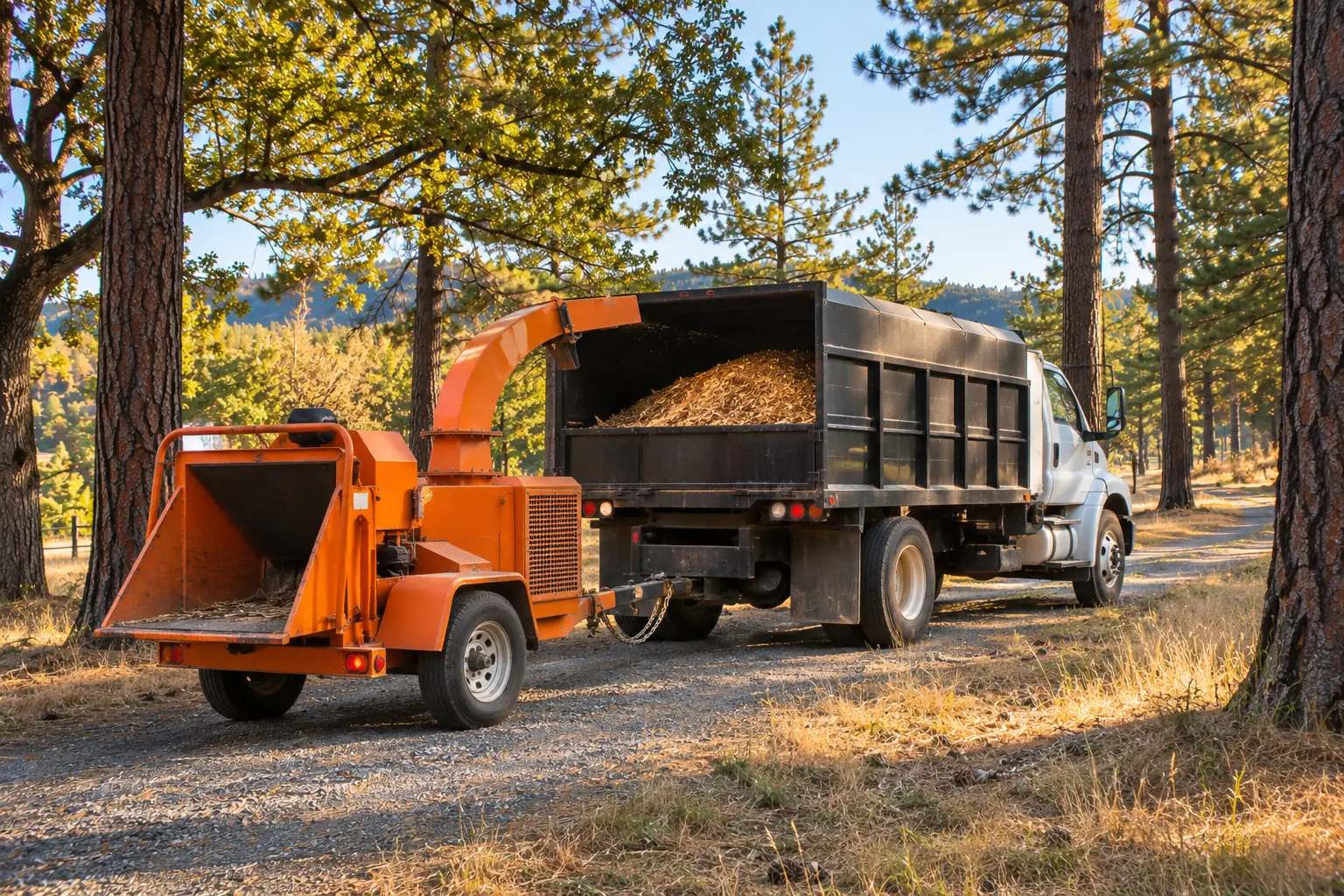
ODF's 2026 regulated closure for Southwest Oregon ties power saw use to the daily fire danger level:
| Fire danger | Power saw use under the 2026 proclamation |
|---|---|
| Low (green) | Allowed all day |
| Moderate (blue) | Before 1:00 p.m. and after 8:00 p.m. |
| High (yellow) | Before 10:00 a.m. and after 8:00 p.m. |
| Extreme (red) | Not allowed |
The same proclamation requires a shovel and a fire extinguisher of at least eight ounces with each saw, and a fire watch of at least one hour after each saw is used. It says battery and electric saws are included. It also bans backyard debris burning through fire season. Work crews on forest operations follow a separate scale called the Industrial Fire Precaution Level, and the 2026 season opened at Level I, where a fire watch is required unless waived. ODF's fire restrictions page has an interactive map for checking the rules on any spot.
Burning brush later in the year has its own limits. Jackson County's open and barrel burning page says no open or barrel burning is allowed in the county during fire season, that burning is banned from November 1 through the end of February inside the Air Quality Maintenance Area, and that you should check the daily burn advisory at 541-776-7007 and get a permit from your fire agency first. Because of these limits, many tree jobs here end with a chipper instead of a burn pile.
Trees near power lines and buried utilities
Pacific Power handles trees near its distribution lines, and its trees page says its crews and contractors prune near those lines at no cost to the customer. The page also tells homeowners to keep their own saws and pruners away from trees near power lines. If you need tree work close to the wire that runs to your house, Pacific Power can arrange a free temporary disconnect so a tree service can work safely. Call 1-888-221-7070 for tree questions or to ask for a utility arborist to look. That is the customer service number, for things that can wait. A tree already touching or lying on a line cannot wait: stay 35 feet back, call 911 and then the downed-wire line at 1-877-508-5088.
Stump grinding and some clearing jobs disturb the ground, and Oregon's dig rules apply to that. The Oregon Utility Notification Center FAQ defines excavation as any operation that moves earth by any means and asks for notice at least two full business days, and no more than 10, before digging. Call 811, or ask the company whether it files the locate request before it grinds.
Fire-safe trees around rural homes
Limbing trees up and clearing the brush beneath them is one of the most common tree jobs around Rogue River, because fire has come close to town. The East Evans Creek Fire was reported northeast of Rogue River on July 10, 2026, after a car hit a power pole, according to OPB's report. ODF's final update on August 5, 2026 put it at 15,580 acres and 95 percent contained.
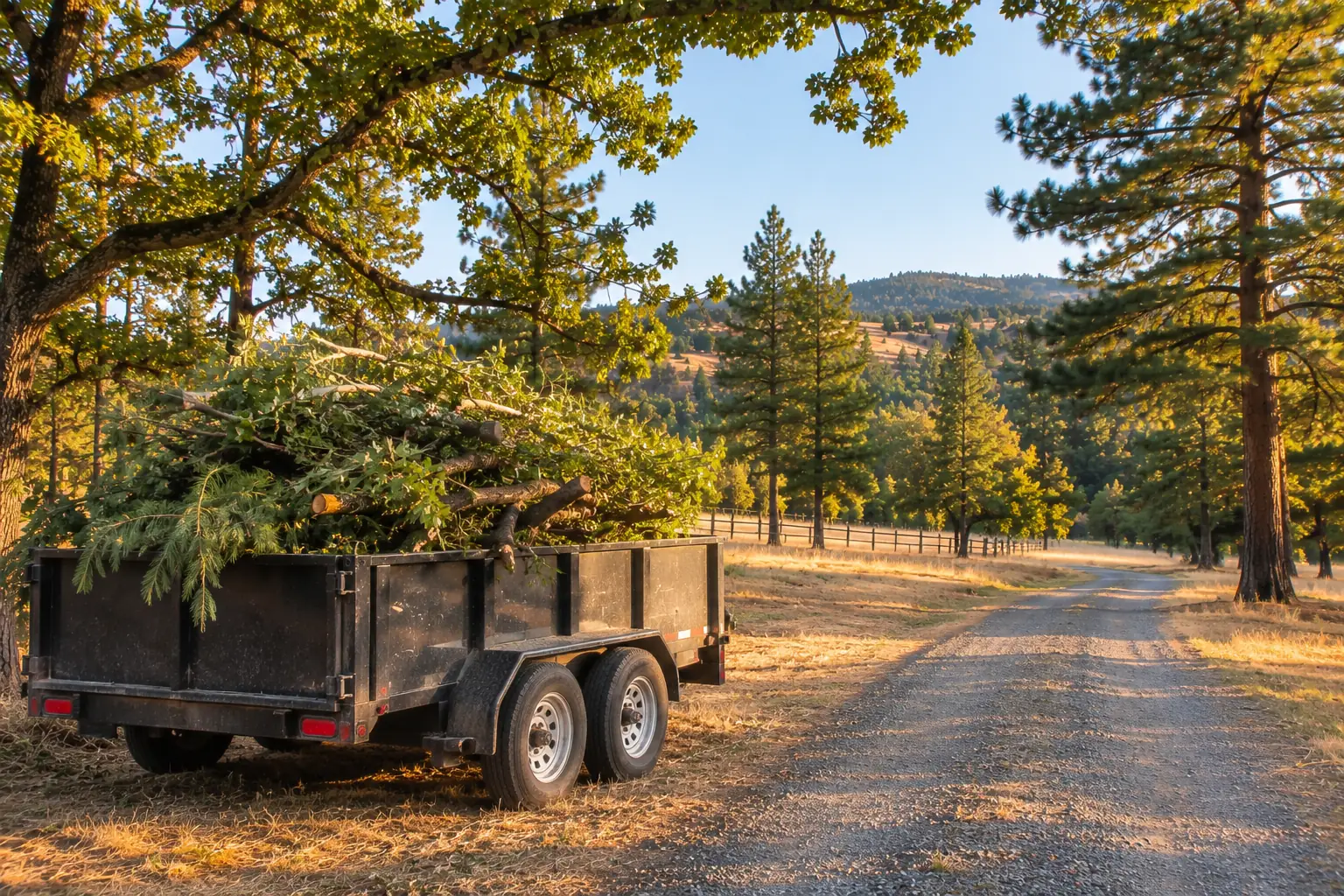
The Oregon State Fire Marshal's defensible space guidance splits the ground around a home into three zones: 0 to 5 feet, 5 to 30 feet, and 30 to 100 feet or more. It advises pruning trees up 6 feet from the ground, spacing tree crowns at least 10 feet apart, and removing ladder fuels, meaning the brush under trees that lets a ground fire climb into the canopy.
A tree service can do the parts that need a saw or a lift: raising limbs on tall pines, thinning crowded young trees, taking out dead ones near the house and chipping the slash. Remember the riparian rules above, since clearing streamside plants for a fuel break needs approval in the city and the county. The fire-safe pruning page explains how a job like this is usually planned, and brush clearing covers the ground-level work.
Pines, firs and oaks: problems that bring calls
Most hazard and removal calls in this part of Oregon trace back to drought stress, insects or decay. Knowing the early signs helps you call while pruning or treatment is still an option.
Pines and bark beetles. ODF's fact sheet on Ips beetles, from April 2021, says these beetles attack pines, often starting at the top, and that dying needles in the top third of the crown are often the first obvious sign. Orange-tan boring dust in bark cracks and small pitch tubes can show up earlier. The sheet says outbreaks usually follow dry springs, when April through July rainfall is 25 percent below normal, and that the beetles prefer fresh pine slash 3 to 8 inches across. That is why the timing and cleanup of pine pruning matters here. The pine bark beetle signs guide goes further.
Douglas-fir decline. OSU Extension's Trees on the edge, published September 2023, explains why many Douglas-firs in Southwest Oregon are dying on hot, dry sites at the edges of the Rogue, Applegate and Umpqua valleys, especially where average rainfall is under 35 inches and elevation is under 3,500 feet. Warning signs include dying tips or tops, thin or yellow foliage and a heavy cone crop. The authors say many small pitch droplets in the bark point to a tree likely to die within one to two years, and that once woodpeckers start flaking the bark, death is almost certain.
Oaks and other hardwoods. Big oaks tend to fail at old wounds, rotten limbs and weak forks rather than all at once. Mushrooms or shelf fungus near the base, cracks where two stems meet and dead limbs high in the crown are all reasons to have someone look. The dead tree warning signs guide lists what to check from the ground, and the pruning calendar for the Rogue Valley covers the best months to prune each common tree. ISA's pruning page notes that pruning before the spring growth flush gives the best growth and wound closure.
What happens after you call
Calling (541) 855-3193 or sending the estimate form passes your request to one independent tree service that holds an Oregon CCB license and works around Rogue River. From there the company gets in touch with you about seeing the tree. Ask whether that visit is free, and ask for the estimate in writing. You can accept it, ask questions, get other bids or say no.
The call is free because the tree service pays this site a fee for each referral. You never pay this site anything. The arrangement is spelled out on the referral disclosure page.
A few details make the first conversation quicker:
- Your road or town, and if you live in the city or out in the county
- The species, if you can name it, a guess at height, and what it would hit if it fell
- Whether a truck can get near it, or it sits on a slope, across a field or by the water
- Wires, a well, a drain field or an outbuilding close by
- Whether something has already fallen or is hanging
This site does not inspect trees, give prices, set schedules or oversee any work. Every decision about price, timing and cleanup is between you and the tree service. Read how it works and the about page for more on what the site does and does not do.
Guides for Rogue River property owners
The guides answer the questions that come up before and after a tree job, with links to the agencies and studies behind each fact.
Start with the cost guide if you are budgeting, the dead tree warning signs if a tree worries you, pine bark beetle signs if a pine is browning from the top, and the pruning calendar if you are planning ahead. The full list is on the guides page, the services are grouped on the services page, and common questions are collected in the FAQ.
Frequently asked questions
Is Tree Service Rogue River a tree company?
No. Tree Service Rogue River is a referral service. It has no crew, no saws and no trucks. Your call or form goes to an independent tree service that holds an Oregon CCB license, and that company does the work and sets the price.
How much does it cost to use this referral service?
Nothing. The call and the form are free for you. The tree service you are connected with pays this site a fee for the referral, and you owe this site nothing at any point. Estimates on ordinary jobs are usually free as well, but the company sets that, so ask before a visit is booked.
Can I have a tree trimmed instead of removed?
Often, yes. Dead wood, a single heavy limb or branches over a roof can usually be pruned without taking the tree down. Ask the company to explain both options on the estimate, and see the trimming page for what a good pruning job looks like.
Do I need permission to cut a tree near Evans Creek?
Usually, yes. Inside city limits, the riparian strip is 50 feet from the top of the bank on Evans Creek and Wards Creek and 75 feet on the Rogue River, per the JSWCD guide to the city rules, and clearing there needs approval. Check with the City of Rogue River at (541) 582-4401, or with Jackson County planning if you live outside the city.
Can tree work happen in the middle of summer?
Yes, within the fire season limits. ODF's 2026 rules for Southwest Oregon allow power saws all day at low fire danger, limited to morning and evening hours at moderate and high danger, and banned on extreme days. Expect early starts, a fire watch after cutting and possibly a job split over two days.
Who do I call if a tree comes down on a power line?
Get everyone 35 feet or more from the tree and the wire, and assume the wire carries power. Dial 911, then Pacific Power's downed-wire and outage line at 1-877-508-5088. Tree work waits until the utility confirms the wire is safe to work near.