
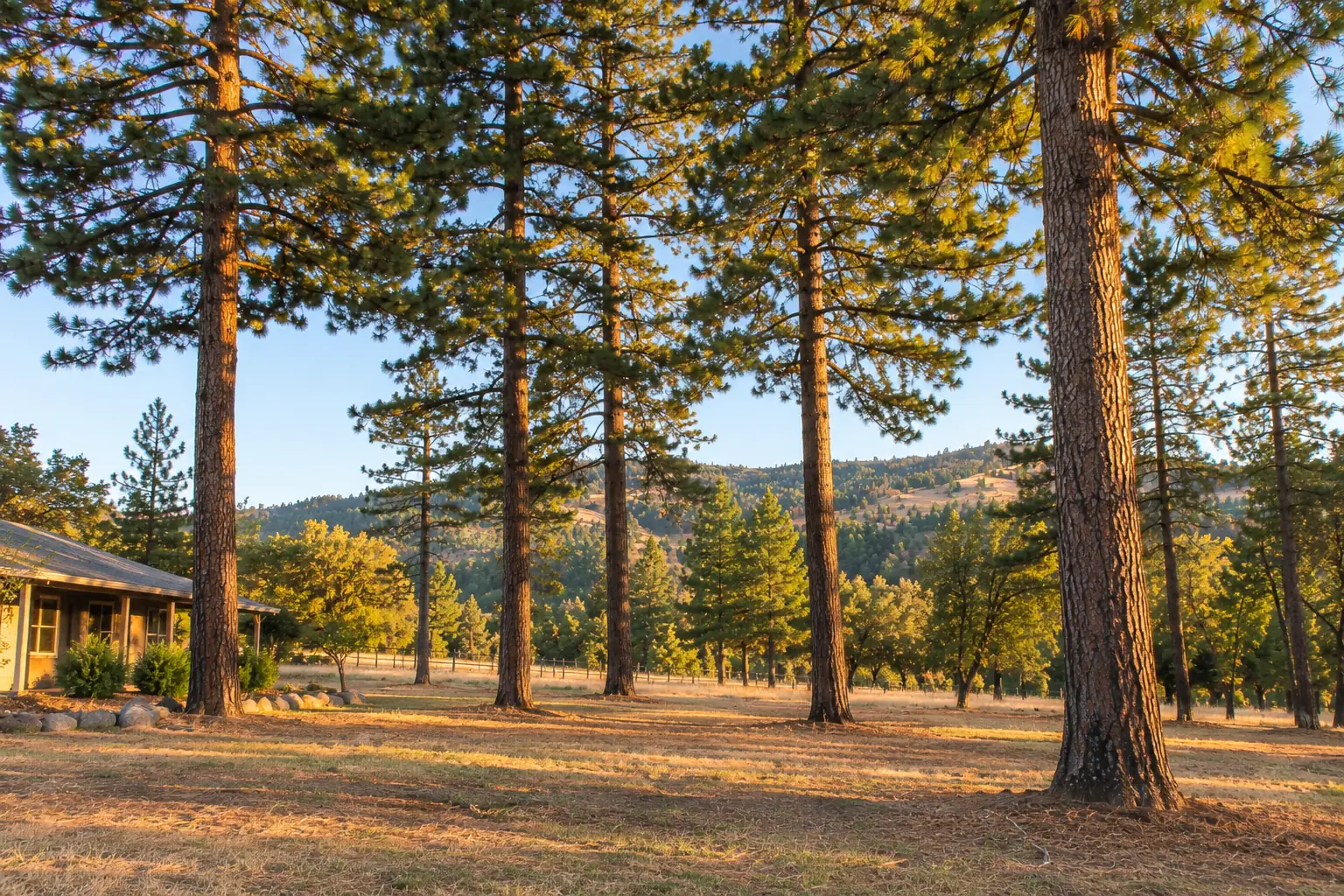
Fire-safe limbing in Rogue River means pruning the lower branches off pines, firs and oaks, opening space between crowns and clearing the brush beneath them, so a grass fire has a harder time climbing into the trees near your home. A free call to (541) 855-3193 connects you with one independent, Oregon CCB-licensed tree service. Ask it to walk the property and quote the limbing, and ask up front whether that walk is free, which it usually is for work of this kind.
Why the lower limbs matter
A ground fire spreads into a tree's crown by climbing whatever sits between the grass and the branches. Low limbs, small trees and brush under a big pine act like rungs. The Oregon State Fire Marshal calls these ladder fuels and, on its defensible space page, says to remove them along with heavy ground litter and deadwood.
Fire-safe limbing is aimed at that gap. It is not the same as thinning a forest stand or clearing a lot. The goal is fewer ways for flames to move up into the trees and toward the house, while keeping the trees you want.
Oregon's guidance, zone by zone
The State Fire Marshal's page sorts the area around a home into zones moving out from the walls. The tips below come from that page. It does not assign every tip to a single zone, so use them as a starting point and ask for a free assessment for your own lot.
| Zone | Distance from the home | What OSFM guidance points to |
|---|---|---|
| Immediate | 0 to 5 feet | Swap bark mulch for rock, gravel or pavers, and take out junipers and other plants that burn easily |
| Intermediate | 5 to 30 feet | Limb trees to 6 feet above the ground, keep at least 10 feet between neighboring crowns, and cut out the brush beneath them |
| Extended | 30 to 100+ feet | Thin out ladder fuels and clean up deep litter and dead wood on the ground |
The same page offers a free defensible space assessment by the State Fire Marshal's office, an education visit that gives owners tips for their property. Getting one before you ask for tree work bids helps you know which trees and shrubs actually matter.
How a crew does fire-safe limbing
A fire-safe limbing visit has a clear order, and you can ask for each step in the estimate.
- Walk the property with you. Agree which trees stay, which small trees and shrubs go, and how far out from the house the work reaches.
- Prune up the lower limbs. Branches come off cleanly just outside the branch collar, as ISA's pruning sheet describes. The same sheet says no more than 25% of a crown should come out at once as a general rule, so a short young tree may not be limbed as high as a tall one.
- Open space between crowns. Where crowns touch near the house, the crew removes smaller trees or cuts limbs back to side branches.
- Clear the understory. Brush, small saplings and dead material under the trees are cut out.
- Clean the roofline. Limbs over the roof and gutters are cut back, and the crew can blow needles off the roof if asked.
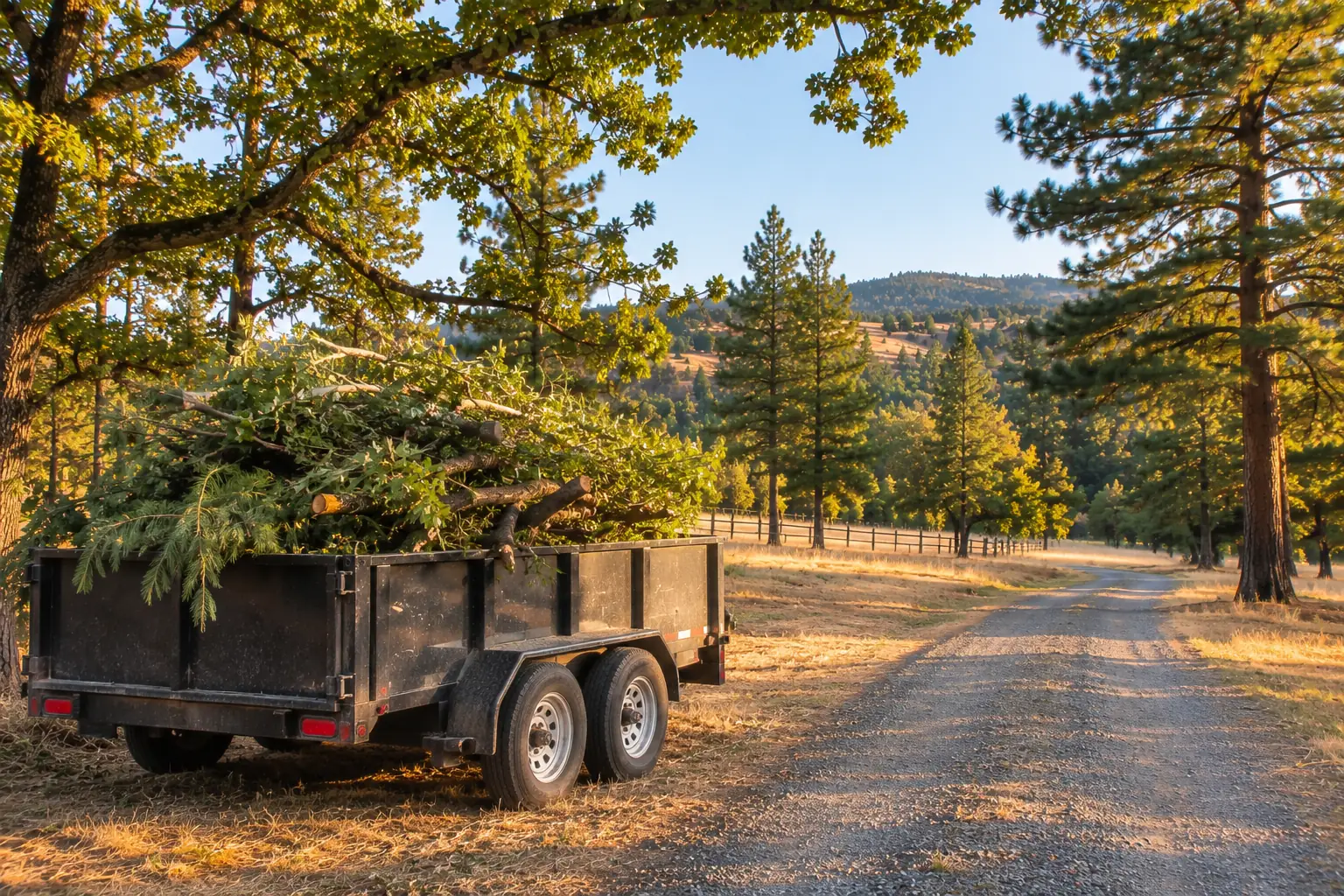
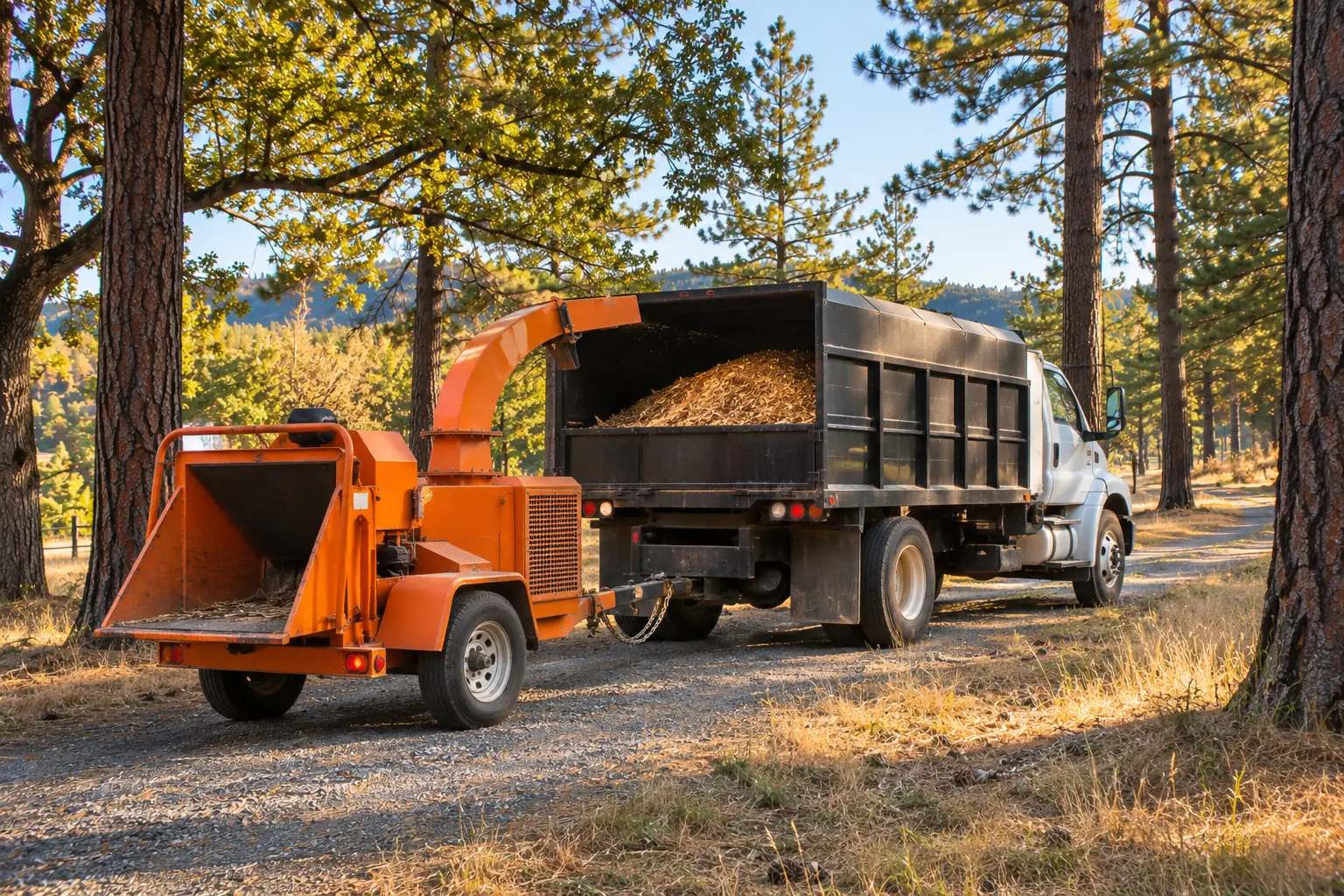
- Deal with the debris. Limbs are chipped on site or hauled. Chips spread near the house add fuel, so ask for them to go farther out or away.
Which trees to start with
Start with the trees closest to the house and work outward. On most rural lots around Rogue River, the order that makes sense is:
- Trees whose limbs hang over the roof, deck or chimney.
- Conifers within about 30 feet of the house with branches near the ground.
- Groups of trees whose crowns touch next to the driveway, since that is often the way out.
- Dead trees and dead limbs anywhere near the home. The hazard and dead tree page covers how to judge them.
- Brush and small trees growing up under larger ones.
Creek and river corridors are different
Fuel break clearing does not override creek protections. Inside Rogue River city limits, the riparian chapter covers ground up to 75 feet back from the Rogue River's top of bank and up to 50 feet back from Evans Creek, Wards Creek and other fish-bearing streams. Section 17.135.040 lists removing vegetation to create fuel breaks among the prohibited activities in that corridor, unless the city and the state and federal agencies approve it. The same section lists perimeter mowing and other cutting needed for fire hazard prevention among activities the city may approve.
The Jackson Soil and Water Conservation District's city guide puts it plainly: wildfire fuel break requirements do not override riparian protections. In unincorporated Jackson County, the district's county guide lists clearing vegetation for wildfire fuel breaks among the things that need prior approval inside the setbacks. If your house sits near Evans Creek or the river, call City Hall at (541) 582-4401 or Jackson County Development Services at (541) 774-6900 before the work is planned.
When to schedule the work
Limbing is easier to schedule outside fire season, when saw hours are not limited. In 2026, ODF's Southwest Oregon District began fire season on May 15, and the Evans Valley Fire District's fire season page reports that ODF lowered fire danger to low on October 26, 2026. During the season, the district's closure proclamation sets these limits:
- Power saws, including battery and electric chainsaws, are banned on extreme fire danger days.
- On high days they may run before 10:00 a.m. and after 8:00 p.m., and on moderate days before 1:00 p.m. and after 8:00 p.m.
- Every saw must have one shovel plus a fire extinguisher rated eight ounces or larger on hand, and someone has to watch for fire for an hour after cutting stops.
- Mowing dried, cured grass follows the same hour limits, and battery or electric string trimmers are included.
- Backyard debris burning is prohibited throughout fire season.
Booking from late fall through early spring avoids most of that. It also gives time to deal with the cut limbs before the grass dries out again. For timing by tree type, see the pruning calendar for the Rogue Valley.
What to do with the cut limbs
Chipping is usually the simplest way to handle limbs from fire-safe pruning. DEQ's Southern Oregon outdoor burning guide lists composting or chipping plant material on site as an alternative to burning. It says open burning in the Rogue Valley is allowed outside fire season on burn days only, and gives 541-776-7007 for Jackson County burn day information.
Inside city limits, the open burning chapter allows backyard burning of yard debris only with a burn permit from Jackson County Fire District No. 1, on a legal burn day, in daylight, with wind under 10 miles per hour, a connected hose, 15 feet cleared around the pile and no overhead utility lines. No pile may burn within 25 feet of a building, a combustible fence or other combustible material. Many owners pay to have limbs chipped instead.
What fire-safe limbing costs
Limbing is usually priced like trimming, by the tree or by the hour, with chipping and hauling as extra lines. LawnStarter's tree trimming cost guide, updated September 24, 2026, gives typical trimming at $430 to $640 per tree and $85 to $415 for trees under 30 feet. Its tree removal guide, updated October 5, 2026, lists chipping debris at $65 to $125 and hauling at $50 to $90.
A property with many small pines needing a few cuts each is often bid by the day. Ask for a per-tree or per-day price and a clear boundary for the work. Doing the closest zone first and the outer zone in a later year is one way to spread the cost. The cost guide covers more.
Questions for the company
These questions help you compare bids:
- How high will you limb each tree, and how will you keep within ISA's guidance for crown removal?
- Which trees and shrubs do you suggest removing, and why?
- How far from the house does the work reach?
- Are chipping and hauling included, and where will the chips go?
- Can I have your CCB license number? (Look it up yourself on the Oregon CCB license search.)
- If any trees are in a creek corridor, have you planned around the riparian rules?
For brush on its own, see the brush clearing page. For larger acreage, see land clearing. The home page lists every service and town covered.
Frequently asked questions
How high should I limb my trees for fire safety?
Oregon State Fire Marshal guidance calls for limbing trees to about 6 feet above the ground. On young or short trees, the ISA guidance against taking more than about a quarter of the crown at once can mean less.
How far apart should tree crowns be?
The same OSFM guidance asks for a gap of 10 feet or more between crowns. A free OSFM defensible space assessment can show which trees on your lot to focus on.
Can I clear brush along the creek for a fuel break?
Inside Rogue River's riparian corridor, removing vegetation to create fuel breaks is prohibited unless approved, and outside the city it needs county approval. Check before cutting.
Is fire-safe limbing bad for the tree?
Removing lower limbs within ISA's guidance is a normal pruning job. Heavy cuts that strip most of the crown are what stress a tree.
Can I limb trees during fire season?
Yes, within ODF's saw rules: banned on extreme days, limited hours on moderate and high days, with a shovel, an extinguisher and a fire watch after cutting. Booking outside the season is simpler.