
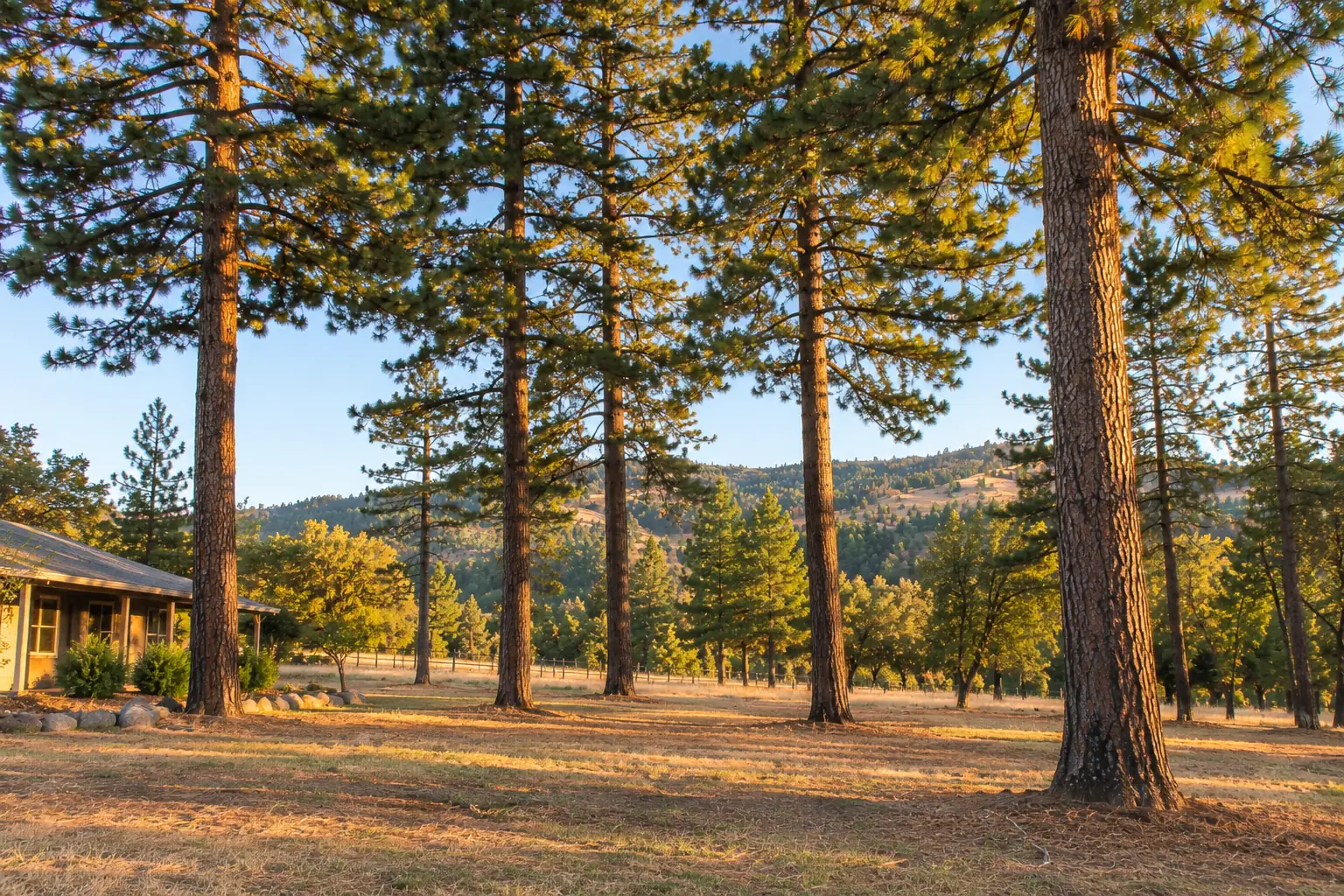
Bark beetles in a pine show up first as small blobs of pitch or reddish boring dust on the bark, then as a top or whole crown that fades from green to yellow to rust. Around Rogue River the usual suspects are Ips beetles and the western pine beetle. A tree service reached at (541) 855-3193 can remove an infested pine before beetles spread.
Four bark beetles that attack pines here
Each beetle works a different part of the tree, so where the signs show up hints at which one you have. The Oregon Department of Forestry's forest health fact sheets describe the pattern this way: Ips beetles attack the top, the western pine beetle and mountain pine beetle attack the main trunk, and the red turpentine beetle works the lower trunk and root collar.
| Beetle | Where it attacks | Pitch tubes | Other signs | ODF fact sheet |
|---|---|---|---|---|
| Ips (pine engraver and California fivespined Ips) | Tops and branches of big pines, and whole sapling or pole-sized pines | Tiny, often missing | Orange-tan boring dust in bark cracks, galleries shaped like an X or Y, a red top in the upper third of the crown | Ips, April 2021 |
| Western pine beetle | Main trunk of ponderosa pine over 6 inches across | Usually under 6.5 mm | Orange-tan boring dust, woodpeckers flaking the bark, winding galleries | Western pine beetle, March 2017 |
| Mountain pine beetle | Main trunk; sugar pine is especially at risk in drought | 13 to 25 mm | Long galleries with a hook at the bottom | Mountain pine beetle, March 2017 |
| Red turpentine beetle | Lower trunk, root collar and fresh stumps | Large and pinkish white, up to 2 inches wide | Coarse frass on the ground that looks like Grape-Nuts cereal | Red turpentine beetle, March 2017 |
The western pine beetle matters most for big ponderosa pines in this part of the state. ODF's sheet says it usually has two generations a year, but three or four are possible in southwestern Oregon. It also says second-growth ponderosa growing in the oak zone of southwestern Oregon is especially open to attack in dry years. The mountain pine beetle is found mostly east of the Cascades in Oregon, ODF says.
A walk-around check for one pine
Start at the ground and work up, since the crown is the last part to change. Take binoculars for the top.
- The base and the soil around it. Look for large pinkish-white pitch masses and coarse, cereal-like frass on the ground. That points to the red turpentine beetle.
- The bark crevices on the trunk. Look for fine reddish or orange-tan dust packed into the cracks. Dust with no pitch can still mean a successful attack. Drought-stressed pines may not have enough moisture to push out pitch, which ODF calls a "blind attack."
- Small pitch tubes up the trunk. Western pine beetle tubes are small, and the USDA Forest Service leaflet on the western pine beetle puts them at about a quarter to half an inch across, creamy white to brownish red.
- Patches of flaked bark. Woodpeckers chip away the outer bark to reach beetles, leaving lighter patches. ODF says this flaking is a common way to identify western pine beetle attack, and it can show up while the needles are still green in winter.
- The crown. A red or faded top third points to Ips. A whole crown turning pale green, then yellow, then brownish orange points to a trunk beetle.
- Holes in the bark. Many tiny exit holes mean a brood has already left.
What the color of the pitch is telling you
Pitch is the tree's defense, and its color and amount give clues about whether the pine is winning. OSU Extension's publication Why are my trees dying? (EM 9551), revised July 2025, says clear or white pitch suggests the tree is fighting back and may recover, while reddish pitch suggests more damage and lower odds of survival.
The Forest Service's Western Pine Beetle leaflet (FIDL 1), revised February 2022, adds that larger white pitch tubes, about three quarters of an inch to an inch across and scattered over the trunk, usually mean the beetle was "pitched out." Mostly white tubes or heavy streams of resin with no boring dust suggest the tree may survive. The same leaflet says the beetle needs thick bark and rarely attacks pines under 6 inches across, even in a bad outbreak.
Not every glob of pitch is a beetle. ODF's red turpentine beetle sheet notes that the sequoia pitch moth leaves much larger pitch masses, usually higher on the tree and near branches or wounds.
How fast a beetle-killed pine changes color
Needles change slowly after an attack, so a pine can be dying for months while it still looks green. ODF's western pine beetle sheet says pines attacked between spring and midsummer usually fade by fall, while trees attacked in late summer and fall may stay green until the next spring. For the mountain pine beetle, the sheet says death is confirmed when the crown changes color between May and July of the year after the attack.
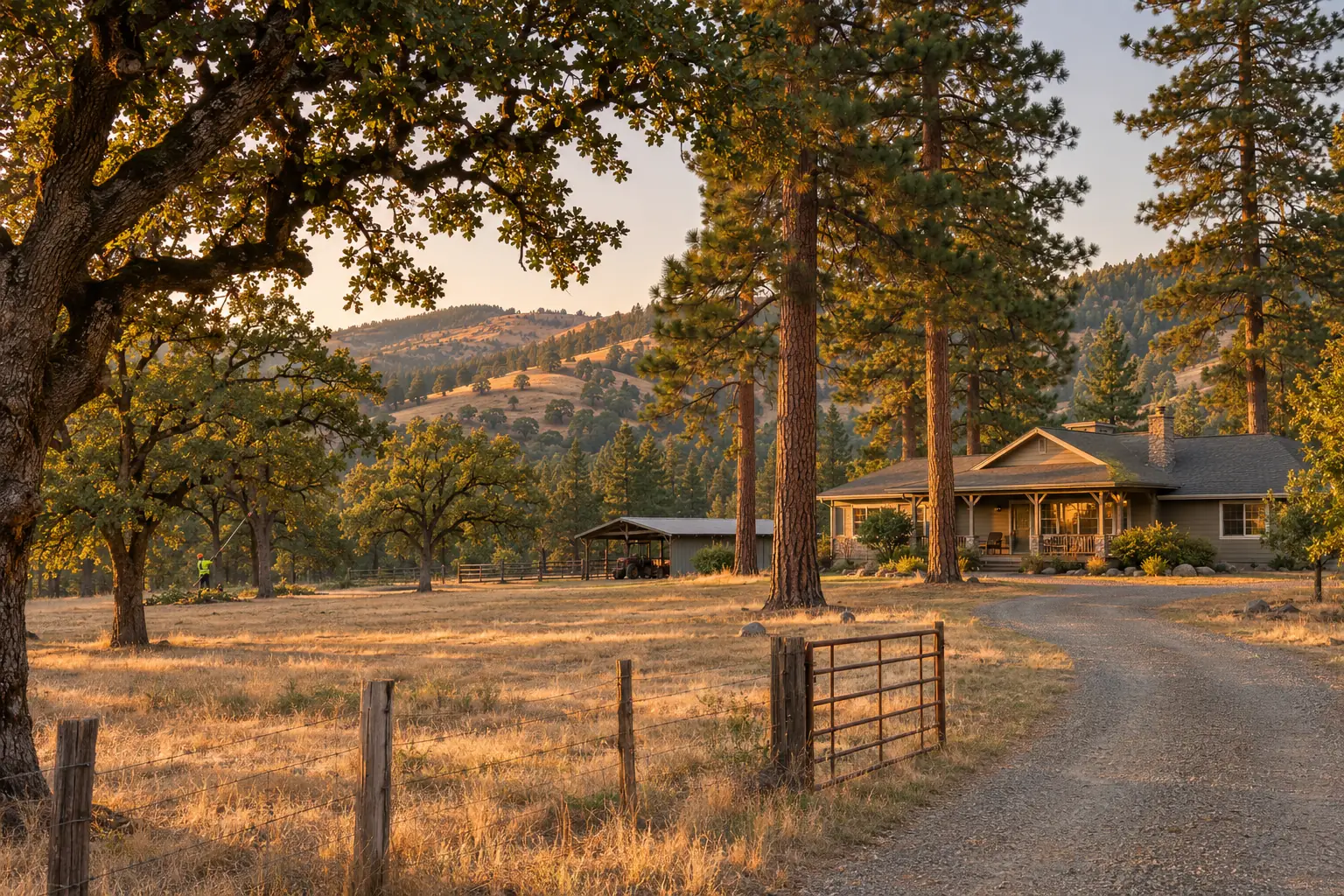
For Ips, the timing works against you. ODF says faded or red needles in the top third of a large pine are the most obvious sign, but by then the tree is often lost. That is why the bark checks above are worth doing on any pine near a house, shop or road, and why a fading top should be looked at quickly.
Why dry years bring more beetles
Drought weakens a pine's ability to make the resin that pushes beetles out, so beetle numbers climb after dry springs and hot summers. The Ips sheet says outbreaks usually follow years when rain from April through July is 25 percent below normal, and that crowded stands of young pines are the most at risk. Ips flights start in April and can continue into October, with two or three generations a year.
OSU's EM 9551 makes the same point from the tree's side. Insects are seldom the root cause. They move in after drought or heat has already weakened the tree, and killing the beetles will not save a tree whose water problem is not fixed. Crowding, thin soil and hot south or west slopes all add stress.
What to do about a pine with beetles
Removing infested pines quickly, before the next brood emerges, is the main tool homeowners have. ODF's Ips sheet says that when trees are dying, quickly removing pines that show frass, pitch tubes, or yellow or orange needles, but no exit holes, can reduce beetle numbers. A tree full of exit holes has usually already released its beetles.
Timing matters too. The western pine beetle sheet advises winter removal of infested trees and says the work should be finished before beetles emerge in March and April. It also recommends thinning crowded ponderosa stands so the trees left standing get more water and light.
Sprays are a limited option. ODF's sheets say preventive insecticides can protect high-value trees, but they are expensive and hard to apply, and they are not labeled for use on slash. The Ips sheet says repellent pheromones such as verbenone do not work for Ips. OSU's EM 9551 says insecticides are best kept for high-value landscape trees and applied by a trained arborist.
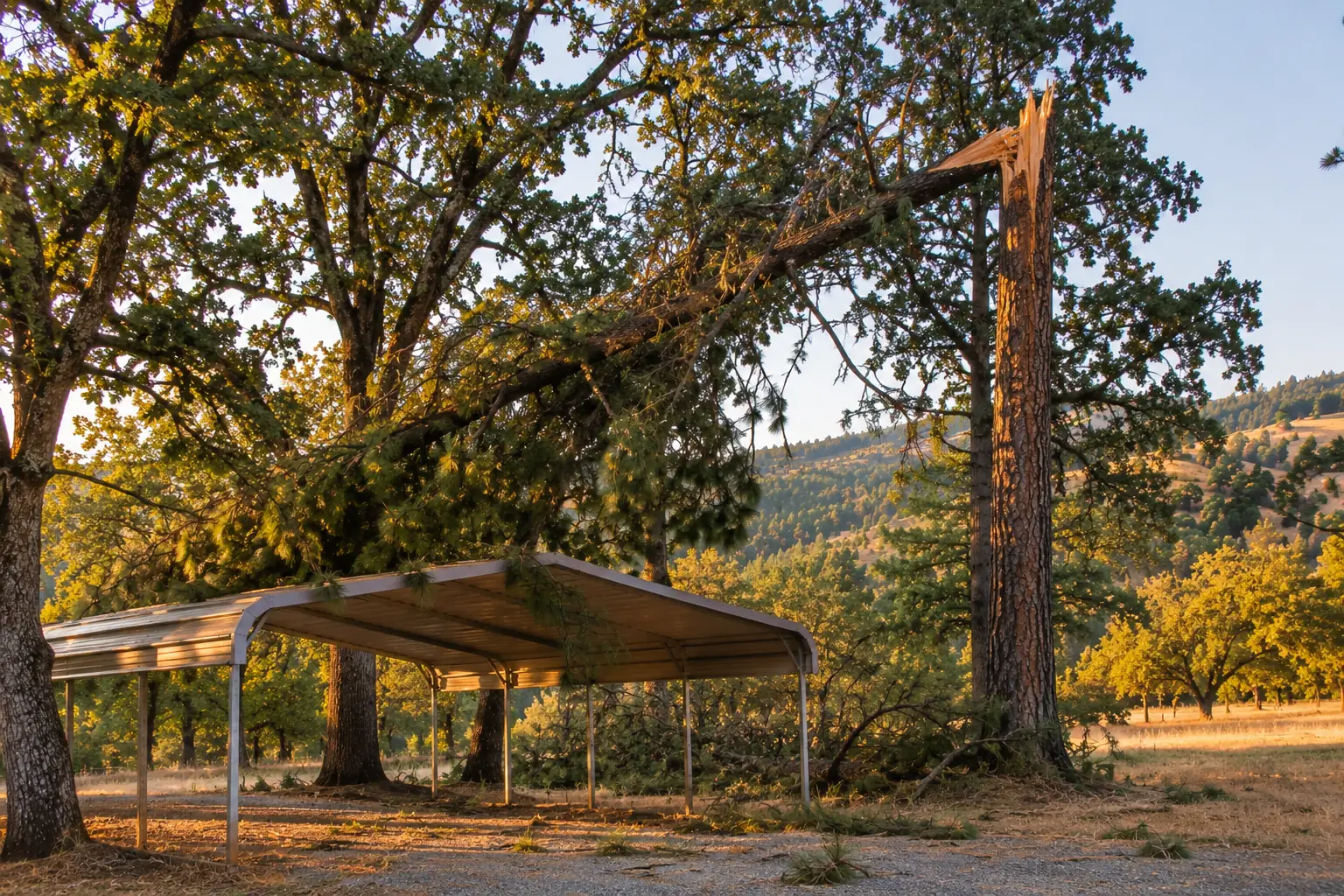
A tree service can take down an infested pine and chip the limbs so they do not feed the next brood. The removal page and the hazard and dead tree page describe that work.
Pine slash and firewood: a timing table
Fresh pine wood left on the ground is where Ips beetles build up, so what happens to limbs and rounds after any pine work matters. These steps come from ODF's slash management fact sheet and the Ips sheet.
| When the pine is cut | What to do with pieces 3 to 8 inches across |
|---|---|
| October through December | Cut into smaller pieces and scatter them in the sun so they dry before beetles fly in April |
| January through September | Chip, burn or bury them before April, or within about two months of cutting |
| Any time | Do not stack fresh pine logs, firewood or slash beside live pines |
| Older than a year | No action needed; ODF says slash over a year old is generally not suitable for bark beetles |
ODF says chipping to pieces under 3 inches makes wood unsuitable for most bark beetles, and that scattering chips in the sun helps them dry. The red turpentine beetle sheet adds that the smell of fresh pine resin draws that beetle in, and that fresh stumps are ideal breeding sites, so infested stumps should be debarked. Burning has its own limits here. The 2026 Southwest Oregon regulated closure proclamation bans backyard debris burning throughout fire season, so chipping is usually the practical choice from spring into fall. The pruning calendar shows how this fits with other tree work through the year.
Who can confirm what you are seeing
A trained person looking at the bark can usually tell you which beetle is involved and whether nearby pines are at risk. OSU Extension's guide How to determine what's ailing a tree suggests photographing the tree, noting your location and sending both to your county OSU Extension office, asking for the local forester. ODF's forest health page has the full set of fact sheets and the yearly aerial survey reports.
For hands-on help, ask the tree service whether it has an ISA Certified Arborist on staff, and check its license on the CCB license search. Calling (541) 855-3193 reaches an independent, CCB-licensed tree service working around Rogue River. A beetle-killed pine dries out and becomes a falling and fire risk, and the dead tree warning signs guide explains what to watch for next. Head back to the home page for the other services.
Frequently asked questions
What does bark beetle damage look like on a pine?
Look for small pitch tubes or reddish boring dust in the bark cracks, flaked bark where woodpeckers have been feeding, and a crown or top that fades from green to yellow to rust. Drought-stressed pines may show dust with no pitch at all.
Can a pine with pitch tubes survive?
Some pines survive an attack. The Forest Service says large white pitch tubes with no boring dust often mean the beetle was pushed out. OSU says clear or white pitch is a better sign than reddish pitch. A crown that is already fading is a bad sign.
Should I remove a pine that has beetles?
ODF advises quickly removing pines that show frass, pitch tubes or yellowing needles but no exit holes, because that can reduce beetle numbers before the next brood flies. Trees already full of exit holes have usually released their beetles. Ask a tree service to look at nearby pines at the same visit.
Is it safe to keep pine firewood from the tree?
Fresh pine rounds can breed Ips beetles. ODF says not to stack fresh pine wood next to live pines and to chip, burn or bury 3 to 8 inch pieces cut from January through September within about two months. Split wood stored well away from pines and dried is a lower risk.
Do sprays stop bark beetles?
ODF says preventive insecticides can protect high-value trees but are expensive and hard to apply, and OSU says spraying large trees is hard to do well. Sprays do not fix the drought stress behind most attacks.